
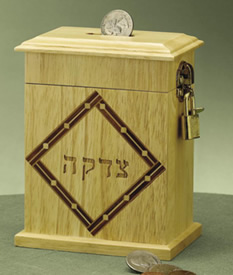
The Hebrew word for charity, tzedakah, comes from tzedek, justice. Hence its different connotation compared to common usage: charity, for a Jew, is not a voluntary offering expressing the generosity of the giver, but a matter of "justice", a fundamental obligation whereby everyone must give a portion of their income to help the poor and needy.
(...) The importance of charity is instilled in children at a young age, and in every Jewish home there is a sort of charity box (pushke) in which the youngest put their savings, encouraged by their parents. Rabbis emphasise the importance of tzedakah by saying that its value is equal to that of all the other commandments combined. A rabbinic saying teaches: "Tzedakah saves from death". A contemporary rabbi, Reuven Kimmelman, comments: "tzedakah may not save us, but it undoubtedly makes us worthy of salvation". The emphasis on charity is of a practical kind. The attention is not so much on the motives that push a person to give, but rather on the practical assistance offered to those in need. In reference to this, the great Jewish rabbi and philosopher Maimonides drew up a list of eight "degrees" of charity. The highest is the one that allows the recipient to become independent, such as offering a job to a poor person
Source: "Per conoscere l'ebraismo" by Daniel Taub